

Want to eliminate poverty in the world?
It helps to understand the principles that actually create prosperity.
Today (March 9, 2026) marks the 250th anniversary of one of the most important books ever written.
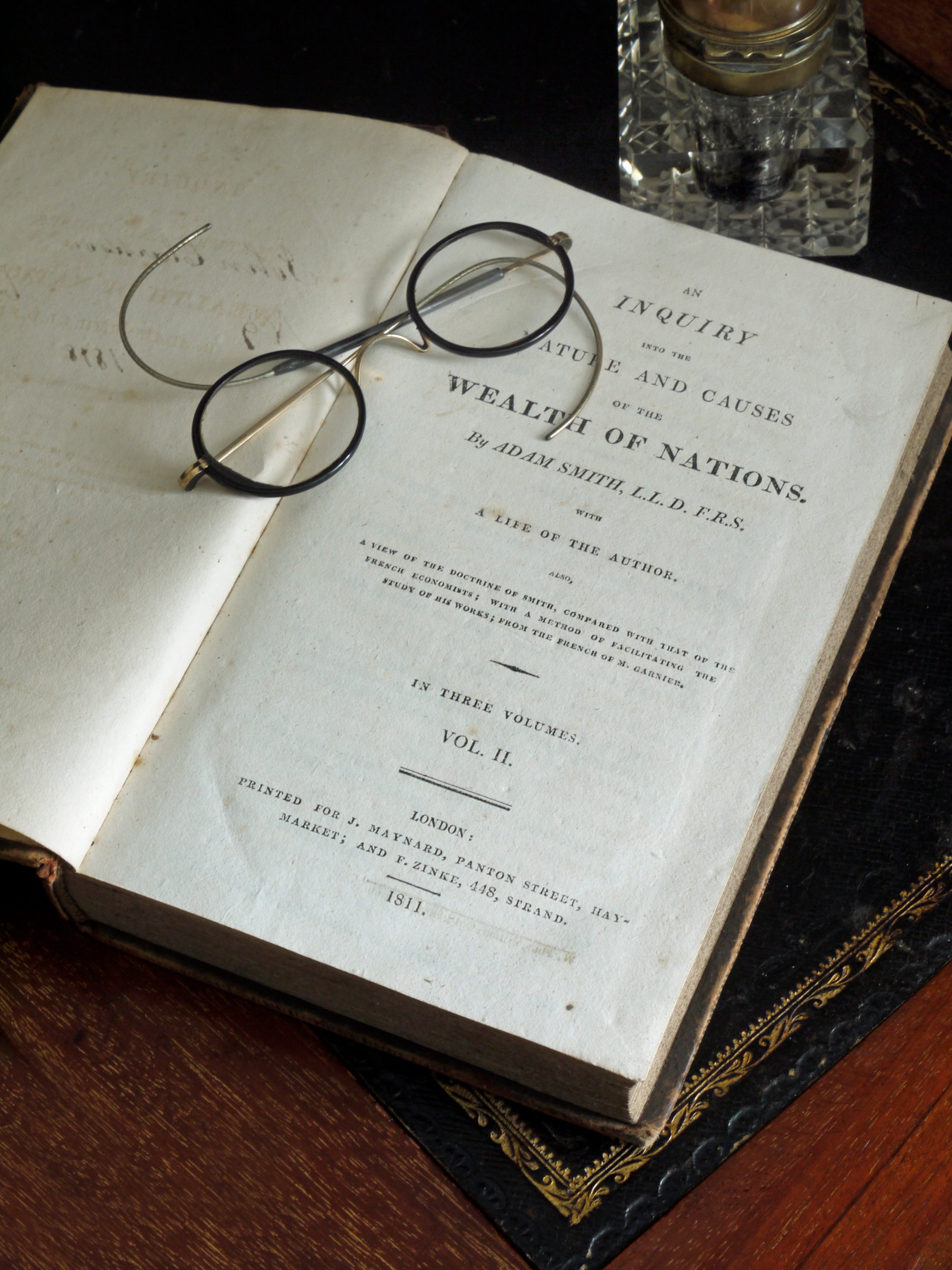
On March 9, 1776, Adam Smith published An Inquiry into the Nature and Causes of the Wealth of Nations.
Interestingly, that same year also produced another revolutionary document — the Declaration of Independence — establishing the moral foundation of political freedom at the same time Smith articulated the foundations of economic freedom.
Together, these two works helped shape the modern world.
The Book That Changed How We Understand Prosperity
The Wealth of Nations fundamentally changed how the world understands prosperity and the underlying causes that create it.
Many people claim to want to eradicate poverty and help humanity live in a more prosperous and free society. Yet very few have seriously studied the principles discovered and explained in this remarkable work.
Before Smith, governments largely believed wealth came from:
controlling trade
accumulating gold and silver
protecting domestic industries through tariffs and monopolies
This system was known as mercantilism, and it dominated economic thinking for centuries.
Adam Smith challenged it.
And in doing so, he helped launch modern economic thought.
Smith’s Revolutionary Insight
Smith demonstrated something far more powerful:
Wealth is created by human productivity — by individuals freely exchanging value in markets.
From this insight flowed several fundamental ideas:
Division of labor increases productivity
Prices coordinate information across society
Voluntary trade benefits both sides
Economic freedom leads to prosperity
These ideas helped shape the economic systems that lifted billions of people out of poverty over the next two centuries.
A Timeless Reminder
In an era when economic interventionism — taxes, tariffs, and government controls — is again fashionable (in reality, a regressive step backward), Smith’s work remains a powerful reminder:
Prosperity is not engineered by governments.
It emerges from free individuals producing, trading, and innovating.
One of Smith’s most famous observations captures this idea perfectly:
“It is not from the benevolence of the butcher, the brewer, or the baker that we expect our dinner, but from their regard to their own interest.”
Read the Book
The book is now in the public domain and freely available online.
You can download the full text here:
Free PDF — Liberty Fund Edition
https://oll-resources.s3.us-east-2.amazonaws.com/oll3/store/titles/237/Smith_0206-01_EBk_v6.0.pdf
250 Years Later
Two hundred and fifty years later, the principles Smith articulated remain as true as ever.
Yet in many ways our policy debates still circle around the same misconceptions he worked so hard to dismantle.
At the very least, this anniversary is a reminder that the knowledge exists — for anyone curious enough to return to first principles and understand the true sources of prosperity in human society.
Sometimes the most revolutionary ideas are the ones humanity has already discovered — yet they are forgotten and buried beneath fashionable, intellectually high-sounding “modern” economic theories.
I did not realize that Adam Smith’s Wealth of Nations was published in the same year as the Declaration of Independence. I knew that The Wealth of Nations came out before the Declaration and that the Founding Fathers had read it. I agree with your perspective, it is good food for thought.